Communication towers perform not fall short gracefully. When a pole bends or even a person support sneaks, you feel it in the cajole, in the positioning of microwave dishes, in obstruction problems, as well as in the overtime expense when teams clamber to decommission as well as re-rig. Ground is frequently at the facility of that tale. The peaceful workhorse stopping these migraines is the groundwork system, and also for numerous internet sites, helical anchors deliver the appropriate combination of capability, rate, and predictability. They are certainly not a cure‑all, yet they fix a ton of side instances that typical pierced shafts and escalate grounds have a problem with, especially on small, soft, or ecologically vulnerable ground.
This item maps out exactly how helical anchors and also associated systems fit into the world of high rises and industrial masts, where they shine, and where other choices like micropiles or even protection piles still make good sense. It draws from area knowledge along with latticework high rises, monopoles, and rooftop masts, coming from seaside clays to wind-scoured spine leadings, with an eye towards functional particulars: tons, installment, screening, as well as long-term maintenance.
What a helical support really does
A helical support is a steel arrow with several helix plates joined near the pointer. Throughout installation, the support is actually spun right into the ground making use of a gas drive, effectively pulling on its own downward. Each helix bears upon a distinct ground perspective, mobilizing capability in bearing and skin friction. For guyed towers, a helical tieback anchor or vertical helical pile can withstand stress coming from the man lines as well as compression below the bottom overlays or legs. For monopoles, a design of vertical helical piles tied together with a cap may hold gravitation lots and overturning, while ruined helical piles get side and uplift components.
Unlike steered piles that depend on hammer electricity and produce significant resonances, helical piles enter silently and with little bit of spoils. If you have fiber routes not far away, a medical center wing a block away, or even a multi-tenant records amenities along with vulnerable devices under the website, that setup profile page alone can regulation in helical piles.
Where helical bodies fit in the high rise as well as mast landscape
Communication constructs are actually fussy concerning curvature and also rotation. Microwave backhaul may put up with just a portion of a degree of rotation under service wind bunches. LTE board tilt impacts protection and also disturbance. Strain in guy cables have to stay within tight limits throughout seasons as temperature and wind switch. helical pile foundations That indicates the base body requires not just uncooked capacity however stiffness and also marginal long-lasting creep.
Helical supports succeed in the observing scenarios:
- Soft to medium clay-baseds, silts, and also sands where tolerating coatings exist within 15 to 60 feets. Installation twist associates with capacity in these soils, which makes it possible for on‑site verification without full-scale payload exams on every anchor. Limited gain access to or distant web sites where a 7,000 to 12,000 ft‑lb gas travel head mounted on a skid guide, small excavator, or tracked carrier can go spots a drill rig can certainly not, consisting of mountain range switchbacks or inside fenced compounds. Sites along with low resistance for resonance as well as spoils, like rooftop poles where penetrations and also bunch pathways need to be managed, or even city streets where mucking out a slurry would turn off traffic. Retrofit as well as deep foundation repair for high rises presenting settlement deal or even shaking, where brand new helical piles can be incorporated through little cutouts in existing slabs or inside existing lower leg extensions.
In thick gravels along with cobbles, cemented tills, or superficial bedrock, helical piles are actually certainly not the 1st tool to order. You may pre-drill pilot holes, yet when greater than 10 to twenty percent of anchors demand pre-drilling, the business economics change toward steered or drilled possibilities, featuring micropiles. For extremely high uplift demands in unsatisfactory dirts, large-diameter multi-helix supports can easily work, however space and also installation twist may become confining, as well as you might locate a better pathway with micropile installation as well as grouted bonds.
Loads that matter for towers
Every tower foundation concept begins with tons combinations and the governing limitation states. The traditional load elements are:
- Compression from gravity as well as wind rescinding. Each leg or platform views a portion, often jagged between windward as well as leeward sides. Uplift on the windward lower legs in a latticework high rise or even on pressure side of a monopole base. For guyed towers, the person support takes dominant uplift and also straight components. Lateral loads and also moments transferred into the bottom. Even with guyed bodies, foundation shear can be considerable in ice hurricanes when guy pipes stiffen.
For helical piles, compression capacity originates from coil bearing and shaft friction. Uplift capacity stems from the same mechanisms in pressure. Side capability can be given by battered heaps, deeper embedment, pile groups, or supplementary devices like helical tieback anchors attached with a limit beam. Tieback anchors are actually specifically useful for fella foundations where huge uplift and also sidewise components act in the line of the fella. A helical tieback anchor set at a slant, commonly 30 to 45 levels coming from horizontal, aligns with the tons as well as always keeps connection eccentricities small, which restricts rotation.
The control on style often finds yourself being actually rotation and deflection, not best durability. That is actually where slender shaft diameter, heap team spacing, and also limit rigidity issue. For high rises sensitive to utility, you can easily tune the cap thickness and also stack layout to maintain elastic rotations within limits. If intended rotations are actually really tight, look at a mix of heap styles or even bigger shaft segments to enhance hardness, or even pair helical piles along with a band shaft that spreads loads.
Helical heaps compared with micropiles and protection piles
All deep structure units possess their spot. Helical piles are quick, clean, as well as proven during the course of installment. Micropiles, which are small dimension punched and also grouted heaps along with steel encouragement, thrive in thick stuffing, antarctic till, as well as areas with impediments where a rotary drill can easily accelerate and also grout mobilizes higher connection toughness to the ground. Resistance piles, sometimes named push piles, make use of the structure as reaction to port steel sectors or even pipe in to the ground. For brand new high rises, protection heaps hardly pencil since you lack a building reaction to drive versus, however, for structural foundation repair under existing structures or even equipment platforms, they perform well.
From field knowledge on commercial foundation stabilization projects, helical piles dominate when accessibility is actually constricted, dirt is fairly penetrable, and uplift is considerable. Micropiles dominate when the subsurface is actually unpleasant or when you need to splice around boulders and powers. Expense every kip of capability turns back and forth depending upon mobilization, twist mind supply, grout logistics, and also testing needs. The best method is to price both when the geotechnical problems suggest a toss‑up as well as decide on based upon threat and schedule.
Practical setup for tower sites
A textbook spec will certainly not receive you a secure tower. You need purposeful setup standards as well as screening protocols. The installer ought to take a hydraulic torque scalp along with adjusted readout as well as a record lumberjack or even at the very least a log piece capturing depth, twist, and also any type of rejection activities. Installers track twist because it associates along with capability: even more torque normally means greater soil protection. The connection element relies on coil dimension, bar dimension, and also soil kind, therefore make use of market values supported by previous testing in comparable grounds, not a generic chart.
On a guyed high rise construct near a tidal wetland, for example, our experts used 1.75 in square shaft supports along with triple coils, 10-12-14 in, put in to 35 to forty five feets. The minimum installment torque was 6,000 ft‑lb for company uplift capability around 30 to 40 kips per support with a 2.0 security element. Our company ran verification examinations on 10 percent of supports to 1.5 opportunities design tons along with creep standards of less than 0.04 inches in between 1 and also 10 minutes. The setup took 3 days for twelve supports, consisting of use and also demobilization around a slender slip road that could certainly not take a crane.
Torque is actually certainly not everything. If you attack rejection at superficial depth along with higher torque, you may still be actually sitting in a thin thick level over delicate product, which can trigger long-term creep. In split accounts, aim for helix plates to endure in experienced strata, separated by a minimum of one coil size in between plates. Stay clear of ending a helix stack right at a pointy user interface where consolidation underneath home plate can be jagged. When unsure, extend deeper or even switch over coil space to disperse load.
For high rise legs or pole platforms that require compression and also uplift capacity, utilize a group of upright helical piles arranged around the platform impact and also connect them along with a bolstered concrete limit. If the pole sees sizable lateral, include damaged stacks cast away coming from the tons. For individual supports, helical tieback anchors are actually steered along the fella series, with the best connection installed in a cement deadman or escaped to a steel grillage. The hookup details are actually certainly not petty: you desire to keep the line of activity near the support head to limit bending over stress and anxieties, and you must secure the director from deterioration and also freeze-thaw.
Testing, confirmation, and also acceptance
Owners and providers do not as if unpleasant surprises after aerials are hung. A reasonable screening course goes a lengthy way.
- Proof screening: Select a part of helical anchors as well as fill them to 1.25 to 1.5 opportunities the style bunch, keeping in increases and recording variation and also creep. For tieback anchors, line up the port with the anchor to stay away from bending. Verification of torque relationship: On the very first few anchors of each kind, compare assessed installment torque to pack exam outcomes to affirm the torque-to-capacity aspect. Adjust installment requirements if needed. Tension and also compression examinations under mock wind: Some projects make use of organized individual tensioning and foundation screw checks with a portable inclinometer. It is actually primitive but reliable for capturing delicate anchors in a pattern.
When job involves commercial foundation repair on an existing high rise, incorporate a before-and-after questionnaire. Shoot the elevations of leg base plates as well as re-shoot after heap installment and grouting. If you are stabilizing a foundation crack repair at a substructure or quality beam, spot fracture gauges and also paper motion by means of and also after the work. It aids clear up disputes months later when periodic heave brings in the exact same fracture stand out back.
Dealing with rust and service life
Helical stacks and tieback anchors stay in the ground for decades, typically in grounds that eat on steel. Galvanization is standard, but not a cure for whatever. Evaluate corrosion possible based on dirt resistivity, pH, chlorides, sulfates, as well as redox potential. In gently aggressive dirts, hot-dip galvanization plus sacrificial steel fullness for fifty to 75 years prevails. In hostile web sites, incorporate polymer finishes or utilize grouted shafts where the cement offers a preventive alkaline environment. For seaside and de-icing sodium direct exposure, focus on connections near grade where splash as well as oxygen increase oxidation. Tape caps and make use of non-shrink grout to encapsulate exposed steel where possible.
For individual support scalps, detail weather covers that in fact get substituted after stress checks. I have observed best anchors along with rotted head layers considering that a person left the cover off for a winter season, after that the salts visited work.
When helical anchors belong to deeper structure repair
Retrofitting is where imagination repays. I worked on a 180‑foot latticework high rise where the leeward leg worked out about 3 fourths of an in over four years. The original ground was a shallow spread on overconsolidated sand, and increasing groundwater increased seasonal movement. Our experts put in two helical piles per lower leg via cored openings in the existing lower leg extensions as well as linked them to a brand-new limit shaft. Our team preloaded the stacks somewhat, after that epoxied pins into the outdated footing and also grouted under the bottom plate to re-level. The high rise went back to plumb within a quarter of an in, as well as motions ever since have actually kept under an eighth of an inch seasonally. That certifies as structural foundation repair that actually addresses the device, certainly not just the symptom.
For commercial foundation stabilization below roof poles, low-headroom shapes drive the choice. Short top areas and also expansions can serpent under existing beam of lights. The control variable becomes twist head response and also scaffolding stability in the course of installment. Micropiles may be the far better match where accessibility is actually also tighter as well as grout pipes may be operated inside, however helical piles have the advantage of no moist job and also quicker turnover.
Commercial helical tieback anchor installment for guyed towers
Guy anchors are worthy of unique attention. A typical particular makes use of a helical tieback anchor put in at 35 levels along with multiple coil platters sized for the uplift. The installer developments the support up until target twist and embedment are met, after that hooks up to a steel grillage installed in an improved cinder block at quality. For high-capacity fellas, multiple tiebacks could be packed to a helical pile foundation applications singular grillage with a spreader light beam, allowing redundancy. The key points are actually positioning with the man tons, oxidation security at the head, and also exact tensioning. If the tieback angle is steeper than organized, the upright part of lots develops and also you may find yourself under-designed in uplift on the behind of the support team. Industry workers often readjust angles to prevent a rock or even a stashed line; be sure the style crew approve any type of such changes since the angle math alters the called for capacity.
Edge situations and trade-offs
- Expansive clays: Helical piles may bypass the active area when set up to midsts past seasonal dampness swings. Still, negative skin rubbing during the course of shrink-swell cycles can easily chew on capacity. If heave is considerable, separate the pile shaft coming from the swelling soil along with sleeves or make use of smooth water pipes parts by means of the active layer. Permafrost or even seasonally frozen grounds: Installation torque readings could be misdirecting when frost-stiffened dirts create it resemble ability is higher. Operate in thaw time or predrill through frost. Karst landscapes: Helical piles entering spaces may fall torque instantly and also shed capability. Take into consideration micropiles along with grout to bridge spaces, or use a larger coil spacing that prevents cavity areas recognized by geophysics or even test borings. Seismic areas: Helical piles have succeeded under periodic running when correctly outlined, but team results and liquefaction have to be resolved. If liquefaction is actually feasible, the support might shed neighboring soil support. Micropiles along with deep grouted connects into thick or even rock layers might be more reliable.
Installation workflow that always keeps jobs on schedule
Field strategies choose whether helical anchors provide the promised schedule financial savings. A regimented staff can easily scoot, yet cutting edges on style and twist logging wears away the premium you are actually relying on. A basic, five-step rhythm benefits a lot of tower web sites:
- Stake locations with offsets, validate versus as‑built control, and clear utilities with vacuum cleaner potholing where needed. Pre-assemble lead areas and also coils, validate coil order and space, as well as phase extensions so the operator never ever waits. Advance supports while logging depth and torque every feet, stopping just to verify that torque fads match ground assumptions. If twist spikes early, pull back as well as take into consideration predrilling a pilot. Terminate at the specified twist as well as depth, prepared top elevations, and also promptly hat or secure crowns coming from water intrusion. Perform verification examinations and secure points just before placing hats or even grillage concrete, at that point proceed with hats, backfill, and also person tensioning.
That rhythmus makes it possible for easy reviews. If the 1st 2 anchors install differently than expected, the area developer may adjust. That can indicate transforming coil dimension, including a helix plate, or even moving an anchor a few feet to avoid a stashed outdated footing that the exam pits missed.
Costs, purchase, and also delegations that matter
Bid contrasts on helical job are actually slippery if you carry out not specify acceptance. Call for delegations along with:
- Installer certifications and also tools twist ratings with gradation certificates. Helix arrangements, shaft sizes, and oxidation security details. Proposed torque-to-capacity connection factors based upon identical tasks as well as soils, along with at least one tons examination reference. Testing plan with recognition requirements for creep and also displacement. Weld accreditations and also material residential or commercial properties of the piles.
Unit costs must feature mobilization, setup per direct foot, proof testing, and head particular. Look for exclusions on stone, predrilling, or even ruin fingertip. If the web site possesses any type of chance of refusal in the very first 10 feets, insist on an alternative rate for fly holes so you are not negotiating in the mud.
On a latest commercial helical pile installation for a tiny metropolitan monopole, specifying these products in advance cut improvement purchases to near zero and also always kept the crane opportunity to 1 day. On a different site along with a soft limit over heavy gravel, our team negotiated a hybrid: helical piles for two legs as well as micropiles for the windward leg where rejection tormented the coils. Versatility beat dogma.
Repairing cracks and maintaining existing foundations
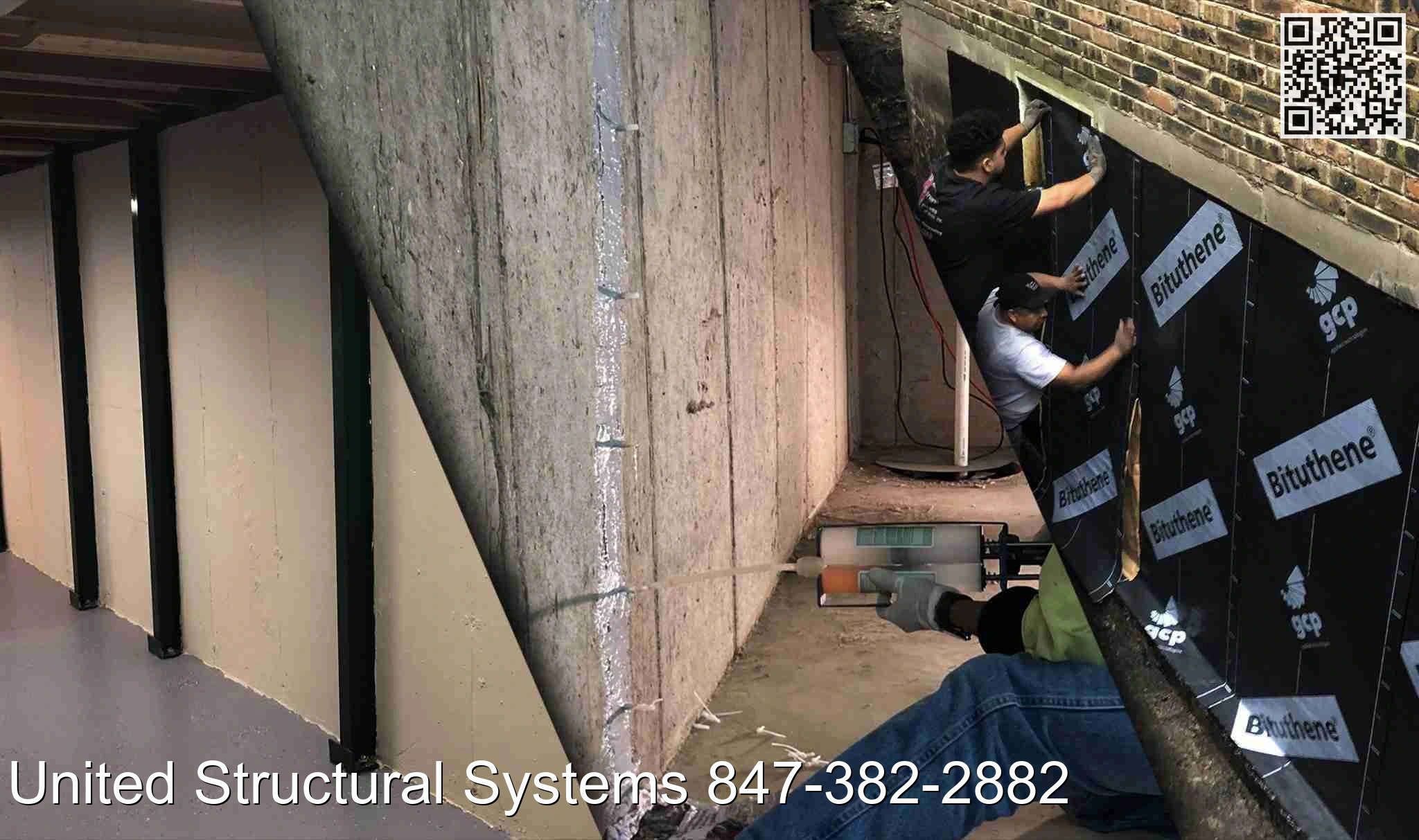
Foundation fracture repair work around high rise pedestals is not cosmetic. A diagonal fracture at a base platter can easily signal strain beyond what the concrete may manage. If you find widening over periods, inspect support strain and base movement all together. Sewing splits along with epoxy alone is actually a band‑aid. Combine it along with extra deep foundation aspects where needed. As an example, add pair of micro heaps doweled right into a beam under the substructure, or even put up brief helical piles via the slab linked right into a brand new ring shaft. With the new support engaged, epoxy injection may recover constancy and help with circulation of tensions. Documentation the steel reinforcement format when you primary, due to the fact that documents on tradition high rises are usually incomplete.
Long-term routine maintenance and also monitoring
After construction, the structure fades from focus till a breakdown. Incorporate it to the upkeep system. During the course of yearly or semiannual high rise checks, possess crews:
- Visually inspect anchor crowns and also limits for deterioration, fractured grout, or activity about grade. Verify fella strains as well as compare to guideline files. Unanticipated adjustments can mean base action or even prolongation in the bunch path. Document any kind of negotiation pens or tilt readings. Small designs are normal; styles are actually not.
If creating a profile criterion for commercial foundation stabilization across a number of tower styles, point out typical examination points and also a simple database to save torque logs, bunch exams, guy tensions, and poll data. When hurricanes hit, you are going to understand which internet sites are worthy of first attention.
Tying it back to the greater toolbox
Helical anchors, helical piles, and helical tieback anchors are actually central resources for contemporary tower structures. They sit along with micropiles, protection heaps, and traditional cement groundworks. The wise play is certainly not to decide on a favored, but to pick based on dirts, tons, get access to, as well as risk. A trusted commercial helical pile installation in silty sands are going to outplay a marginal micropile job that battled impediments all week. A well-maintained micropile installation in glacial till will beat a helical project that made an effort to eat with cobbles and spent times predrilling. For commercial resistance pile installation, presume retrofit and also deep foundation repair where the existing construct delivers reaction as well as area is actually tight.
The absolute best ventures are actually the ones where design, field screening, and setup align. Get the geotechnical exploration right, determine approval early, and team up with installers who log torque as well as test loads instead of guess. For communication towers and also business masts, that style equates straight right into uptime, far fewer site sees, as well as structures that persevere when the weather is actually unkind.
 Ask ChatGPT
 Ask Grok
 Ask Perplexity
 Ask Claude
 Ask Google AI
 Ask You